
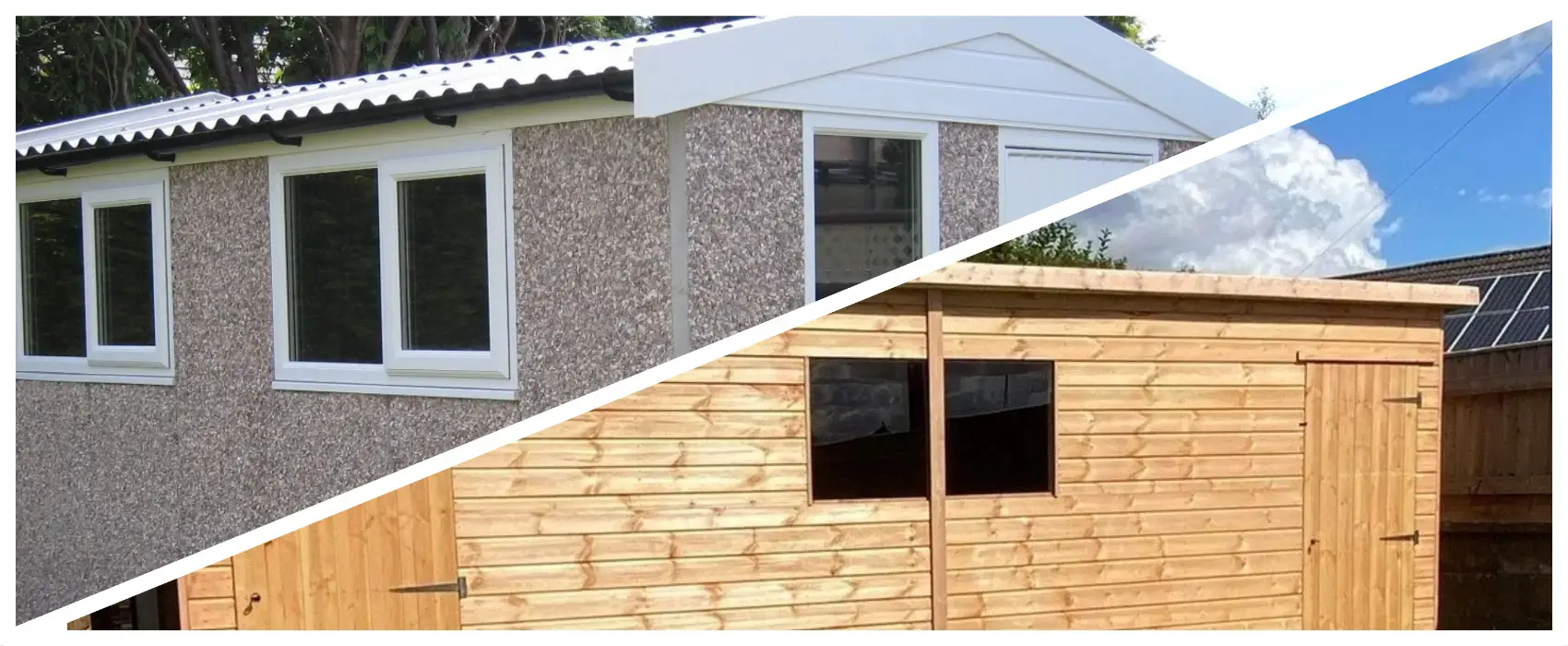
When choosing a new garage for your property, most homeowners narrow their options down to two main construction types: timber and concrete. Both offer distinct advantages, but when we evaluate long term value, durability, maintenance, resale impact, and return on investment, important differences emerge.
This article provides a direct, unbiased comparison while also offering a clear professional recommendation based on long term performance. Ultimately, the best choice depends on your personal needs and preferences, but the facts below will help guide your decision.
1. Durability & Lifespan
Concrete Garages
Concrete is one of the most durable construction materials for outdoor buildings. A well built concrete garage can last 40–60+ years with minimal deterioration. It is resistant to rot, pests, impact damage, and extreme weather. Because of its rigidity and mass, concrete also performs exceptionally well against wind and damp.
Strengths:
-
Excellent structural lifespan
-
Resistant to rot, moisture, and pests
-
Minimal long term degradation
Timber Garages
Modern timber garages—especially those using pressure treated or heavy duty timber—are more durable than many people assume. A high quality timber garage can last 20–30+ years with correct maintenance. However, timber remains vulnerable to moisture, insects, UV damage, and long term movement.
Strengths:
-
Good lifespan if well maintained
-
Natural flexibility reduces cracking or shifting
Long Term Value Verdict:
Concrete wins on durability with a significantly longer, maintenance-light lifespan.
2. Maintenance Requirements
Concrete Garages
Concrete requires very little ongoing care. An occasional exterior wash and periodic roof upkeep are usually all that is needed. There is no risk of rot, swelling, or insect damage.
Timber Garages
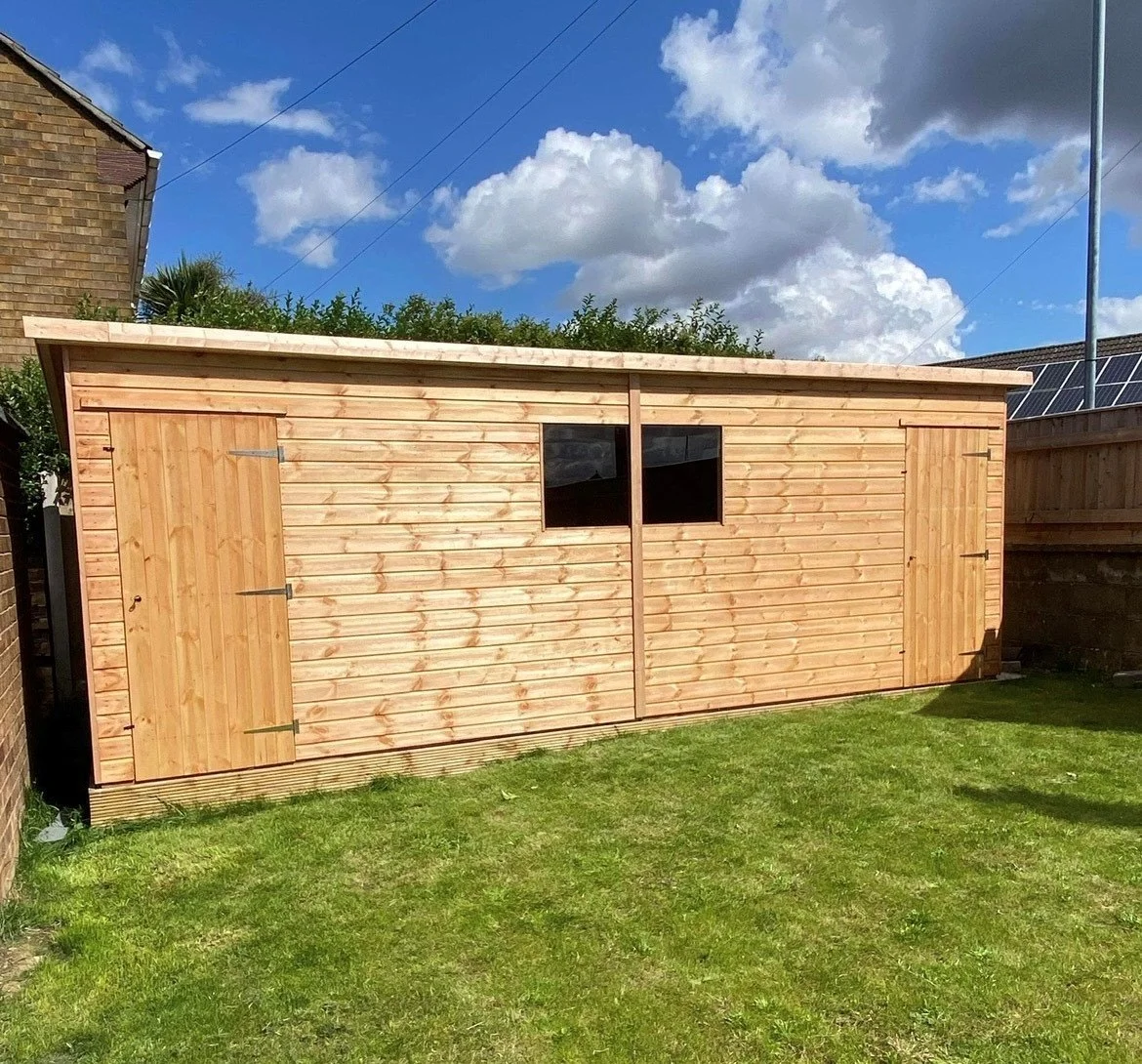
Timber requires regular maintenance to preserve longevity, including:
-
Repainting or re-staining every 2–5 years
-
Inspecting for rot and damp
-
Monitoring movement and expansion
-
Protecting exposed edges and joints
While maintenance is manageable, it is recurring and essential.
Long-Term Value Verdict:
Concrete garages require significantly less maintenance, and therefore deliver better long-term cost-effectiveness.
3. Insulation & Warmth
Timber Garages
Timber naturally provides thermal advantages. It is easier and cheaper to insulate, offers better internal warmth, and is the preferred structure for workshops, hobby rooms, and garden offices.
Concrete Garages
Concrete has poor natural insulation and requires a full insulation system to achieve comfortable internal temperatures. However, once insulated, it becomes a strong all-year-round building.
Long-Term Value Verdict:
Timber wins for natural warmth and low-cost insulation, while concrete requires more investment to become comfortable internally.
4. Aesthetic Appeal & Customisation
Timber Garages
Timber offers a traditional, natural aesthetic that blends seamlessly with gardens and rural architecture. Customisation—doors, windows, roof styles, and finishes is extremely flexible.
Concrete Garages
While modern sectional concrete garages look cleaner and more refined than older designs, they still offer fewer customisation options compared to timber. However, cladding and upgraded finishes can elevate the visual appeal.
Long-Term Value Verdict:
Timber offers superior aesthetics and design flexibility.
5. Security & Structural Strength
Concrete Garages
Due to its solid structure, concrete provides better inherent security, especially against forced entry. Its weight and rigidity make it extremely stable.

Timber Garages
Modern timber garages are secure when properly built, but they cannot match the inherent strength of reinforced concrete.
Long-Term Value Verdict:
Concrete garages provide higher security and overall structural strength.
6. Value Added to Your Property
Concrete Garages
Because of their longevity, fire resistance, and structural solidity, concrete garages are generally viewed as a permanent improvement. Estate agents often note that concrete structures can increase the perceived value of a home more than a timber equivalent.
Timber Garages
Timber still adds value—especially high-quality or large garages—but buyers tend to assess the long-term maintenance burden. Timber structures can sometimes be viewed more like large garden buildings than permanent extensions.
Long-Term Value Verdict:
Concrete typically boosts property value more strongly, due to its permanence.
Final Conclusion: Which One Holds Better Long-Term Value?
From a strictly long-term value, durability, and cost-efficiency perspective, concrete garages come out on top.
They last longer, require less maintenance, offer superior security, and add more permanent value to a property.
However, timber garages excel in other areas natural aesthetic appeal, ease of insulation, flexibility, and internal warmth. For customers using the garage as a workshop, office, or hobby space, timber may still be the better experiential choice.
Our Professional Recommendation
If your priority is long-term value, low maintenance, and maximum durability, then a concrete garage is the superior investment.
If your priority is aesthetic charm, warmth, customisation, or use as a hobby or work space, a timber garage is often the more suitable option.
At the end of the day, the best garage type depends on your personal preference, how you plan to use the building, and how much ongoing maintenance you are comfortable with.
